Wild Rice Pilaf: Savory and Nutty
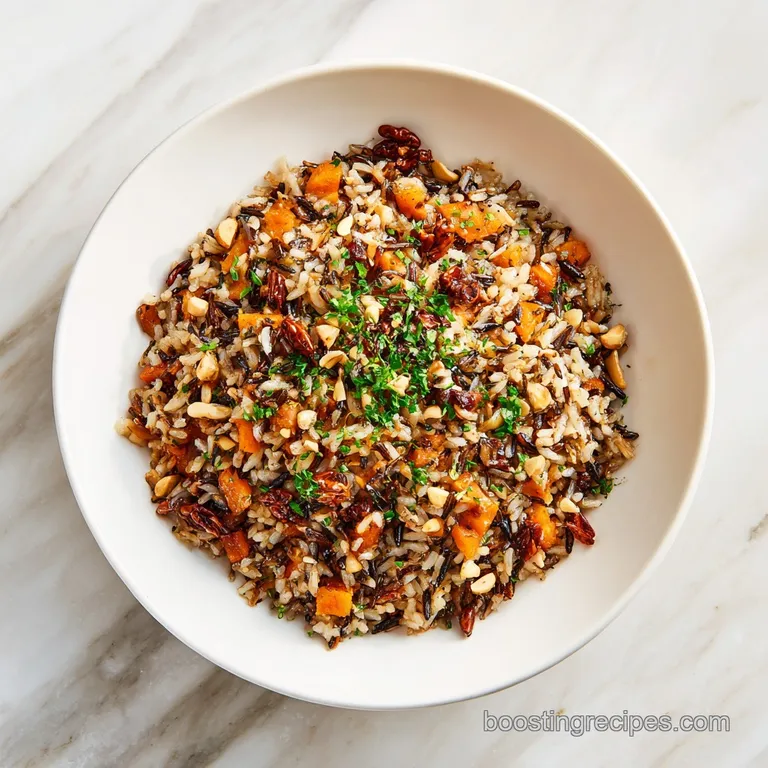
- Time: Active 15 minutes, Passive 50 minutes, Total 65 minutes
- Flavor/Texture Hook: Chewy, nutty grains with a sweet tart crunch from fresh apples and toasted pecans
- Perfect for: Holiday side dishes, healthy meal prep, or a cozy autumn dinner
- Why This Wild Rice Pilaf Beats Every Other Side
- The Secret Technique That Makes This Work
- Essential Metrics for a Flawless Harvest Side
- The Components: Choosing Your Best Grains
- The Right Gear for Even Cooking
- Mastering the Method: Step by Step Guide
- Avoiding Gummy Rice and Common Pilaf Pitfalls
- Smart Scaling for Any Occasion
- Debunking Grain Myths
- Creative Twists to Make It Your Own
- Proper Storage for Meal Prep Success
- Perfect Pairings for Your Harvest Feast
- Recipe FAQs
- 📝 Recipe Card
Why This Wild Rice Pilaf Beats Every Other Side
I still remember the first time I tried to make a big pot of wild rice for a family dinner. I followed a "boil in water" instruction on the back of a bag, and the result was, frankly, depressing. It looked like a swampy mess of grey, split open grains that tasted like wet cardboard.
My kitchen smelled like damp hay, and I ended up tossing half of it in the bin. That failure taught me the most important lesson in grain cookery: if you treat wild rice like plain white rice, it will fail you every single time.
The secret to a truly spectacular Wild Rice Pilaf isn't just about the water to rice ratio, though that matters. It’s about the fat and the toast. By sautéing the grains in oil before adding a drop of liquid, you create a barrier of fat around each grain.
This prevents them from clumping together and releases a popcorn like aroma that adds a whole new dimension to the dish. In this recipe, we’re fixing that "bland" problem by building a massive foundation of flavor with cremini mushrooms and leeks before the rice even hits the pan.
This is the targeted fix for anyone who thinks wild rice is too "earthy" or "tough." We’re using a blend of 100% wild rice and long grain brown rice to balance the textures one brings the snap, the other brings the fluff.
When you fold in those honeycrisp apples and tart cranberries at the very end, you aren't just eating a side dish; you’re eating a textures and flavors powerhouse that actually holds its own next to a main course.
Trust me, once you hear that faint "pop" of the rice toasting in the Dutch oven, you'll never go back to boiling it in a pot of water again.
The Secret Technique That Makes This Work
Instead of just simmering everything in a pot, we are using a few simple bits of kitchen physics to ensure every forkful is distinct and flavorful.
- Dextrinization: Toasting the dry rice in olive oil breaks down some of the starches into sugars, which creates a nutty, toasted flavor that raw boiling can never achieve.
- Selective Hydration: By using a tight fitting lid and a low simmer, we allow the tough outer hull of the wild rice to "bloom" or curl open naturally without the interior turning to mush.
- The Steam Finish: Letting the rice stand covered for 5 minutes after cooking allows the residual moisture to redistribute, which is the difference between "wet" rice and "fluffy" rice.
- Carryover Infusion: Adding the apples and nuts at the end, rather than cooking them, preserves their cellular structure so they provide a "shatter" of freshness against the velvety mushrooms.
| Cook Method | Total Time | Texture Result | Best For |
|---|---|---|---|
| Traditional Stovetop | 65 minutes | Fluffy, distinct grains | Maximum flavor control |
| Instant Pot | 45 minutes | Softer, more integrated | Quick weeknight meals |
| Oven Baked | 75 minutes | Evenly cooked, chewier | Hands off big batch cooking |
Choosing the right method depends on how much you want to supervise the stove. The stovetop pilaf method described here is my favorite because you can really control the browning of the mushrooms, which is where all that deep, savory "meatiness" comes from.
| Component | Science Role | Pro Secret |
|---|---|---|
| Wild Rice | Provides structural "snap" | Rinse thoroughly to remove excess starch and debris |
| Cremini Mushrooms | Adds umami and moisture | Don't salt them until they are fully browned to avoid steaming |
| Leeks | Soft aromatic base | Use only the whites and light greens for a melt in-the mouth texture |
| Vegetable Broth | Liquid for starch expansion | Use low sodium so you can control the final seasoning |
Essential Metrics for a Flawless Harvest Side
To get this recipe right, you need to keep a few specific numbers in mind. Wild rice is a bit of a rebel compared to jasmine or basmati; it takes its sweet time to soften. We are looking for three specific checkpoints during the process. First, your mushrooms need 3-4 minutes of undisturbed heat.
If you stir them too much, they’ll just sweat and turn rubbery instead of getting that gorgeous brown crust.
Second, the rice toasting phase is exactly 2 minutes. You’ll know it’s ready when you smell something that reminds you of toasted nuts or popcorn. Finally, the simmer time is a firm 45-50 minutes. Don't be tempted to peek under the lid at 30 minutes!
Every time you lift that lid, you’re letting out the steam that’s doing the heavy lifting of softening those tough wild rice hulls.
If you find yourself making this for a larger crowd, this recipe scales beautifully. Much like my Sausage Broccoli Farfalle, this pilaf is great for meal prepping because the flavors actually deepen as it sits in the fridge.
The Components: Choosing Your Best Grains
When you head to the store for this Wild Rice Pilaf, look for "100% Wild Rice" rather than just a pre mixed box. Those boxes often have a lot of white rice that turns to mush before the wild rice is even close to done.
By buying the 100% wild rice and a separate bag of long grain brown rice, you’re in total control of the texture.
- 1 cup (160g) 100% Wild Rice: Why this? Provides the signature "pop" and deep earthy flavor.
- 1 cup (185g) Long grain brown rice: Why this? Adds bulk and a softer, fluffier contrast to the wild rice.
- 3.5 cups (830ml) Low sodium vegetable broth: Why this? Infuses the grains with savory flavor from the inside out.
- 8 oz (225g) Cremini mushrooms: Why this? These have less water than white buttons, meaning better browning.
- 1 large Leek: Why this? Gentler and sweeter than onions, perfect for "harvest" flavors.
- 0.5 cup (60g) Dried cranberries: Why this? Provides a tart pop to cut through the savory grains.
- 1 medium Honeycrisp apple: Why this? Stays crunchy even when mixed into the warm rice.
- 0.5 cup (60g) Toasted pecans: Why this? Adds essential healthy fats and a satisfying crunch.
For the aromatics, you'll also need 2 tbsp (30ml) Extra virgin olive oil, 2 cloves of minced garlic, 1 tsp of dried thyme, and 0.25 cup of freshly chopped parsley. Each of these plays a role in making this a "savory wild rice recipe" that people will actually ask for seconds of.
The Right Gear for Even Cooking
You don't need a high tech kitchen to pull off a traditional wild rice pilaf, but the vessel you choose matters immensely. A heavy bottomed pot, like a 4 quart Dutch oven or a deep stainless steel saucepan, is your best friend here.
Cheap, thin bottomed pots tend to develop "hot spots" that can scorch the rice at the bottom while the top stays crunchy.
A tight fitting lid is the other non negotiable. If your lid is a bit loose, place a clean kitchen towel or a piece of foil over the pot before putting the lid on to create a better seal. You also want a good sharp chef's knife for those leeks and apples uniform pieces mean uniform bites.
Honestly, don't even bother with a rice cooker for this specific recipe; the browning of the mushrooms and toasting of the grains is much easier to manage in a wide pan where you have plenty of surface area.
Mastering the Method: step-by-step Guide
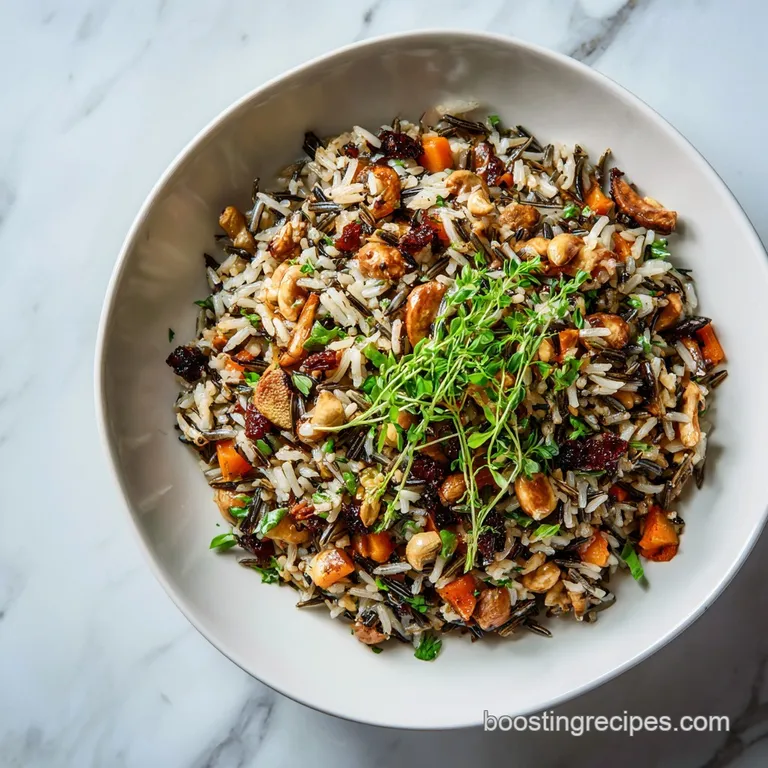
- Brown the mushrooms. Heat the extra virgin olive oil in your Dutch oven over medium high heat. Add the sliced cremini mushrooms in a single layer. Let them sit undisturbed for 3-4 minutes until a deep brown crust develops. Note: Resisting the urge to stir is what prevents them from becoming slimy.
- Soften the aromatics. Add the sliced leeks and minced garlic to the pan. Sauté for 3-5 minutes until the leeks are translucent and fragrant.
- Toast the grains. Add the rinsed wild rice and brown rice to the pot. Stir constantly for 2 minutes until the grains emit a nutty aroma and you hear a faint popping sound.
- Simmer the base. Pour in the vegetable broth and dried thyme. Bring the mixture to a rolling boil.
- Cover and cook. Reduce the heat to the lowest setting, cover with a tight fitting lid, and simmer for 45-50 minutes.
- Check for doneness. Remove the lid after the timer goes off. The rice should have 'bloomed' (the dark hulls have curled open to reveal the light interior) and the liquid should be fully absorbed.
- The rest phase. Turn off the heat but put the lid back on. Let the pot stand covered for 5 minutes. Note: This allows the steam to finish softening any stubborn grains.
- The final fold. Gently fold in the diced Honeycrisp apple, dried cranberries, toasted pecans, and fresh parsley.
- Fluff and serve. Use a fork to fluff the rice, ensuring the "harvest" additions are evenly distributed. Serve immediately while the apples are still crisp.
Avoiding Gummy Rice and Common Pilaf Pitfalls
The biggest tragedy that can befall a pilaf is "the gumminess." This usually happens because of two things: either the rice wasn't rinsed well enough (leaving too much surface starch), or it was stirred too much during the simmering phase. Once you put that lid on, leave it alone!
Stirring activates starches, which turns a fluffy pilaf into something closer to a risotto.
Why Is My Wild Rice Still Crunchy?
If your rice is still pebble hard after 50 minutes, your heat might have been too low, or your lid isn't sealing properly. If the liquid is gone but the rice is tough, add 1/4 cup of hot broth, put the lid back on tightly, and give it another 10 minutes.
Wild rice is notoriously stubborn, and sometimes different brands or ages of rice require a little extra hydration time.
Why Did the Rice Turn Out Gummy?
This usually happens if you used a "quick cook" wild rice blend instead of the 100% wild rice called for. Those blends often contain white rice that disintegrates during a 50 minute simmer. Another culprit is adding too much liquid or not letting the rice rest at the end.
That 5 minute rest is when the excess moisture is absorbed into the grains rather than sitting on the surface.
| Problem | Root Cause | Solution |
|---|---|---|
| Grains are sticking together | Too much surface starch | Rinse rice in a fine mesh sieve until water runs clear |
| Rice is burnt on the bottom | Heat was too high during simmer | Use the smallest burner on the lowest setting; use a heavy pot |
| Bland flavor | Not enough browning in step 1 | Let the mushrooms develop a dark crust before adding liquid |
Common Mistakes Checklist:
- ✓ Ensure you rinse the rice thoroughly (removes dusty starches)
- ✓ Don't skip the toasting step (develops the nutty flavor)
- ✓ Keep the lid on for the full 50 minutes (no peeking!)
- ✓ Use a Honeycrisp or Fuji apple (soft apples like Red Delicious will turn to mush)
- ✓ Toast your pecans separately before adding for maximum "crunch"
Smart Scaling for Any Occasion
If you're cooking for two, you can easily halve this recipe. Use a smaller saucepan, but keep the simmer time the same wild rice needs that time to bloom regardless of the quantity.
If you're cutting the recipe down, you might want to use half an egg to bind a small portion of the leftovers into rice cakes the next day!
When scaling up for a big holiday party (2x or 3x), do the browning of the mushrooms in batches. If you crowd the pan with 24 oz of mushrooms, they will just steam and turn grey. Work in batches to get that golden brown color, then combine everything for the simmering phase.
You may need to reduce the broth by about 10% when doubling, as less liquid evaporates in a larger, deeper pot.
Debunking Grain Myths
- Myth: Wild rice is a type of rice. Truth: It’s actually the seed of an aquatic grass! This is why it behaves so differently and requires a much longer cook time than standard white or brown rice.
- Myth: You have to soak wild rice overnight. Truth: While soaking can reduce cook time slightly, it's not necessary for a great pilaf. The 45-50 minute simmer in broth is more than enough to achieve the perfect texture.
- Myth: Adding salt to the water makes the rice tough. Truth: This is an old wives' tale. Salting the cooking liquid is essential for seasoning the grain from the inside out. However, we use broth here, which provides that salt naturally.
Creative Twists to Make It Your Own
One of the best things about an easy wild rice pilaf is how adaptable it is. If you aren't a fan of mushrooms, you can swap them for diced butternut squash or sweet potatoes. Just sauté them until they are slightly caramelized before adding the rice.
For a more "spring" version, swap the cranberries and apples for dried apricots and toasted almonds.
If you want to make this a full meal, it's a great base for a "power bowl." Much like the logic behind Asian Chicken Wraps, you want a balance of sweet, salty, and crunchy. Adding some shredded rotisserie chicken or roasted chickpeas on top makes this a high protein lunch that stays fresh for days.
| Premium Ingredient | Budget Alternative | Flavor Impact |
|---|---|---|
| Fresh Leeks | 1 Yellow Onion | Slightly more pungent, but still delicious |
| Honeycrisp Apple | Granny Smith Apple | More tart, less sweet; still keeps its crunch |
| Cremini Mushrooms | White Button Mushrooms | Milder flavor, but saves about $2-3 |
| Pecans | Sunflower Seeds | Nut free and cheaper; provides similar crunch |
Proper Storage for Meal Prep Success
This wild rice pilaf with mushrooms is a meal prepper’s dream because it doesn't get mushy in the fridge. In fact, many people (myself included) think it tastes better on day two once the thyme and garlic have had more time to mingle with the grains.
- Fridge: Store in an airtight container for up to 5 days.
- Freezer: This freezes surprisingly well! Place in a freezer bag, flatten it out, and freeze for up to 3 months. Thaw in the fridge overnight before reheating.
- Zero Waste Tip: Don't throw away the dark green parts of the leek! Wash them well, slice them thinly, and sauté them with a bit of butter and salt for a great topping on toast or to add to a vegetable stock bag in your freezer.
Perfect Pairings for Your Harvest Feast
This dish is the ultimate "chameleon" side. It feels fancy enough for a Thanksgiving table but simple enough for a Tuesday night. I love serving it alongside roasted chicken or a thick cut pork chop. Because of the apples and cranberries, it pairs beautifully with anything that has a bit of sage or rosemary.
If you're looking for a vegetarian spread, serve this alongside a big roasted cauliflower "steak" or a simple kale salad. The "bloom" of the wild rice provides enough chew that you won't even miss the meat.
It’s a savory wild rice recipe that brings enough personality to the plate to be the star, but enough balance to be the perfect supporting actor. Right then, let's crack on and get those mushrooms browning!
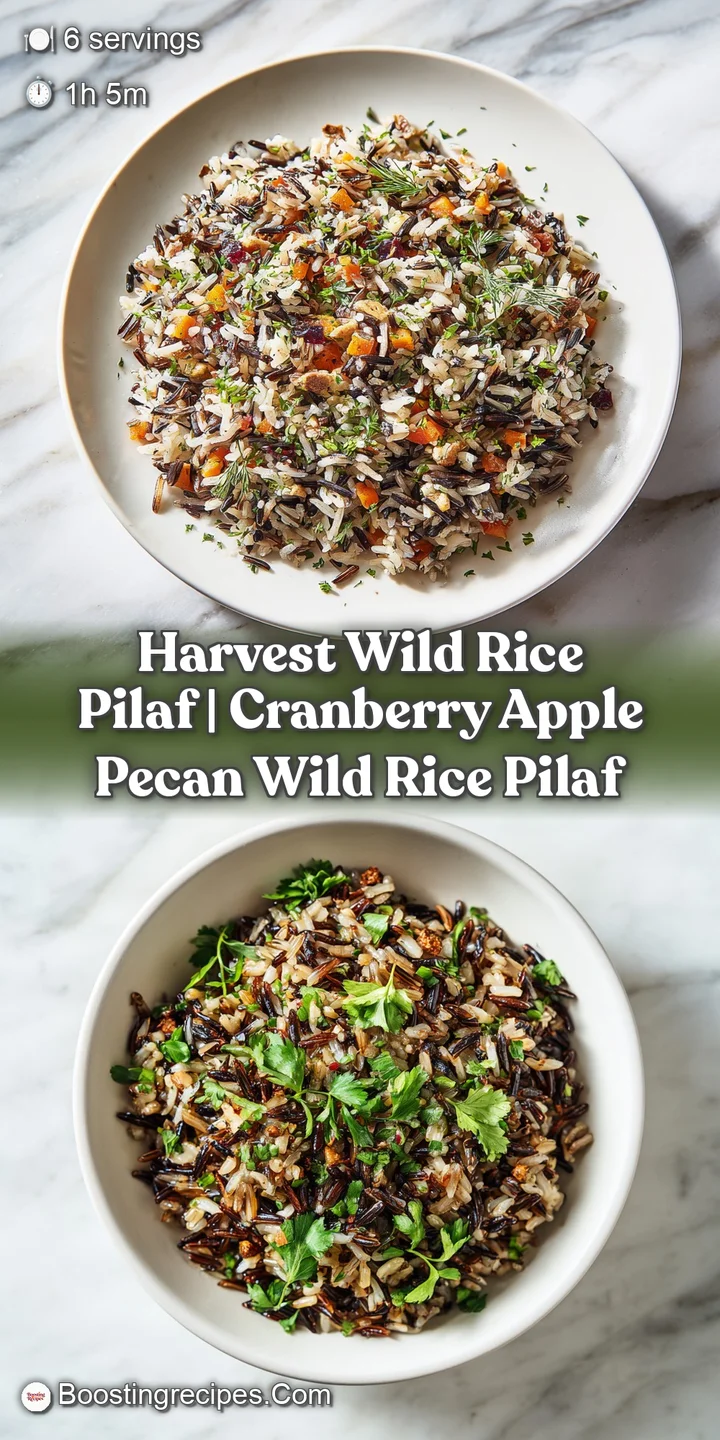
Recipe FAQs
What's the difference between wild rice and rice pilaf?
They are entirely different things. Wild rice is actually a semi aquatic grass seed with a chewy texture, while a pilaf is a specific cooking technique where grains are toasted in fat and then simmered in a seasoned broth to create individual, fluffy textures.
Is it true I should just boil the wild rice like pasta?
No, this is a common misconception. Boiling wild rice in excess water often leads to mushy, flavorless grains; instead, use the pilaf method by toasting the rice in olive oil for 2 minutes before simmering it in broth to ensure a nutty flavor and distinct texture.
What are some common mistakes when making wild rice pilaf?
Skipping the initial toast and stirring is the biggest error. You must toast the grains in olive oil for 2 minutes until they smell nutty, and avoid over stirring the mushrooms early on to ensure you get a deep brown crust for maximum umami.
Is wild rice good for triglycerides?
Yes, it is a heart healthy choice. Wild rice is a whole grain rich in fiber, which can help support healthy cholesterol and triglyceride levels when compared to refined carbohydrate sources.
Is wild rice okay for Hashimoto's?
Yes, it is generally considered a beneficial, nutrient dense whole food. Being naturally gluten-free, wild rice is often included in anti inflammatory diets which are frequently recommended for those managing autoimmune thyroid conditions.
How to ensure the rice is perfectly cooked?
Simmer on low for 45-50 minutes with a tight fitting lid. Only remove from the heat once the hulls have curled open and the liquid is fully absorbed, then let it stand covered for 5 minutes before fluffing with a fork.
How to prep this dish in advance?
Sauté the mushroom and leek base up to 2 days ahead of time. Keep the mixture in the refrigerator and simply reheat it in your saucepan before adding the rice and broth to start the main cooking process.
Savory Wild Rice Pilaf
Ingredients:
Instructions:
Nutrition Facts:
| Calories | 394 kcal |
|---|---|
| Protein | 9.1 g |
| Fat | 13.2 g |
| Carbs | 63.8 g |
| Fiber | 7.2 g |
| Sugar | 12.4 g |
| Sodium | 315 mg |
